Averett Restoration Totowa
📞 862-421-8856
Totowa • NJ

Mold Remediation in Totowa.

Mold prevention done DURING drying instead of remediation done AFTER — applied to every water loss we mitigate.

Local team in Totowa Honest, transparent pricing 24/7 emergency line
Local Based in Totowa, NJ
IICRC S500 + S520 + S700 protocols
Insurance Direct billing to all major carriers
Service Overview

How We Approach It

Mold remediation is what happens when a water event was not properly dried, or when a chronic moisture problem was ignored long enough for fungal growth to establish. We follow the IICRC S520 standard for safe, effective mold removal in Totowa properties.

What's Included

  • IICRC S520 protocol
  • Negative-air containment
  • HEPA filtration
  • Source removal to documented line
  • Antimicrobial application
  • Optional 3rd-party clearance testing

Why Bleach Does Not Kill Mold (And What Actually Does)

The single most common mold-remediation myth: bleach kills mold. It does not. Bleach is mostly water plus sodium hypochlorite. It can lighten surface staining (which is why people think it worked) but the chlorine evaporates while the water soaks into porous material, feeding the fungal growth underneath. Within weeks the visible mold returns.

What actually works: physical removal of the contaminated substrate. If mold is on porous material (drywall, insulation, untreated wood, carpet pad), remove the material. If mold is on hard non-porous surfaces (sealed concrete, finished wood, ceramic tile), HEPA vacuum + wipe with EPA-registered antimicrobial. Either way, the source moisture has to be eliminated first or the mold returns regardless of what cleaning was done.

Antimicrobial chemicals have a place in our protocol — applied AFTER source removal, on remaining hard surfaces, as a final step before reconstruction. They do not substitute for source removal. A Totowa restorer who promises to "spray and seal" without removing contaminated substrate is selling a treatment that fails predictably.

Containment + Hepa Filtration — Why the Plastic Sheeting Matters

If you walk into a mold remediation job and the contractor is not running HEPA-filtered negative-air containment, walk back out and call someone else. Disturbing mold growth releases millions of spores into the air. Without containment, those spores spread throughout the rest of the property — turning a contained 200 sqft mold problem into a whole-house contamination event.

Proper containment: 6-mil plastic sheeting + zip-wall framing creates a sealed barrier between the affected area and the rest of the structure. HEPA-filtered air scrubbers run inside the containment to capture airborne spores during the work. Negative-air pressure differential (containment is at lower pressure than the rest of the structure) means any air leakage flows INTO the containment rather than out. PPE for the techs: Tyvek suits, respirators with P100 cartridges, gloves, foot covers.

This setup adds equipment cost and labor time to a remediation job, which is why fly-by-night operators skip it. The cost difference shows up later — when the contamination has spread to areas it was not in before, and the second remediation is 3-5x the first.

Process

Our Process

  1. 01

    24/7 Dispatch

    Live answering service routed directly to dispatch. Most Totowa addresses see a truck within 60 minutes of the call.

  2. 02

    Iicrc S500 Protocol

    Loss category established (Cat-1, Cat-2, Cat-3) on first inspection. Protocol matched to category — no shortcuts on contaminated water cleanup.

  3. 03

    Industrial Drying

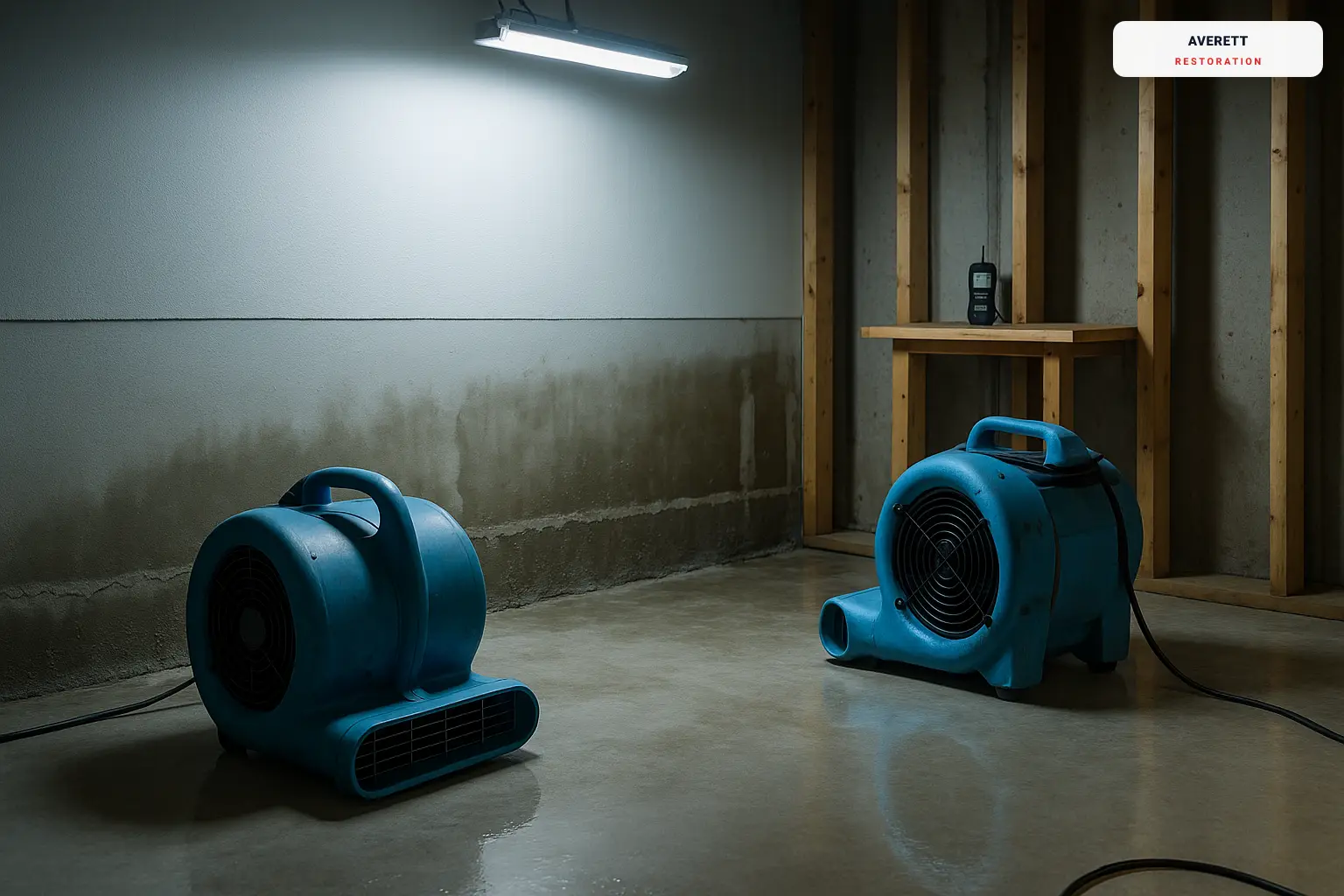
    Truck-mounted extraction, high-velocity air movers, LGR dehumidification, HEPA-filtered negative air when needed. Equipment sized to the loss, not under-spec to save cost.

  4. 04

    Verified Moisture Clearance

    Final clearance readings on every substrate before reconstruction starts. We do not close the mitigation phase on "looks dry" — we close it on documented moisture content at baseline.

  5. 05

    Single-source Reconstruction

    Rebuild scope mapped directly from mitigation documentation. No contractor handoff, no scope renegotiation, no surprise costs three weeks in.

The difference

Why Customers Choose Us

Real reasons. No invented stats, no manufactured awards.

  • 01

    Real Totowa Dispatch

    Phone answered by a human in NJ 24/7. No automated phone tree, no offshore call-center, no callback after the loss has gotten worse. Truck rolls while you are still on the call.

  • 02

    Insurance Documentation Discipline

    Photos, moisture readings on a building diagram, Xactimate scope at carrier-standard pricing, equipment runtime logs. The full record goes to the adjuster so the claim closes without back-and-forth.

  • 03

    Single-Source Contracting

    Same crew handles mitigation AND reconstruction. No handoff to a separate general contractor mid-job. One contract, one phone number, one team accountable from first call to final walkthrough.

Service Area

Serving Passaic County

From our Totowa base we cover Passaic County and the immediately surrounding NJ municipalities. Sub-hour response on active losses, pre-staged equipment for storm season, IICRC-standard methodology applied to every job regardless of size.

Counties Covered

  • Passaic County, NJ

Cities We Service

Each Passaic city below opens a local page with arrival times from our Totowa base and the loss patterns we handle most often in that municipality.

Not sure if you're in our area? Call 862-421-8856 and we'll tell you in 30 seconds.
FAQ

Frequently Asked Questions

If you don't see your question, just call or message us.

How do you make sure mold does not come back? +

Mold prevention happens during drying, not after. We hold the structure under controlled airflow until moisture meters confirm wood, drywall, and substrate are back inside the manufacturer-approved dry range. Anything porous that absorbed contaminated water comes out. Surfaces receive a registered antimicrobial before reconstruction. We also pull access panels and inspect HVAC ductwork if water tracked into the system.

Will my floors and walls have to come out? +

Often less than people expect. Category-1 (clean supply-line) water that we reach inside 24-48 hours can usually be dried in place. Category-3 (sewage, river, ground intrusion) is different — IICRC S500 protocol requires removing porous materials those waters contacted. We cut to a documented flood line and replace what comes out.

How long does drying take after a water loss? +

Three to five days for a typical residential water loss. Hardwood floors and dense materials can take longer — sometimes 7-10 days. We monitor with calibrated moisture meters daily and only stop drying when readings return to dry-standard moisture content for the materials in your home.

Do you work directly with my insurance company? +

Yes, with your authorization. We work with NJM, State Farm, Allstate, Liberty Mutual, Travelers, Progressive, and most other carriers serving NJ. Get the claim number from your carrier first if you can; with that we can talk to your adjuster directly and bill the carrier rather than you.

How fast can you respond to an emergency in Totowa? +

For active emergencies in Totowa, our standard target is on-site within the hour during normal traffic conditions. We dispatch 24/7 — a real human answers the phone, gets the address and loss type, and a truck rolls while we are still on the call with you.

What happens to my contents during restoration? +

For minor losses, we move content within the home to dry/safe areas and clean as needed. For significant losses, we offer pack-out service — your contents are catalogued, transported to our cleaning facility, sorted by material type, cleaned appropriately, and stored climate-controlled until the property is ready for re-occupancy. Pack-out keeps possessions out of the affected environment so they stop absorbing additional damage.

How do you handle pets and kids during the work? +

For most water restoration work, pets and kids stay in unaffected areas of the home and life continues. We coordinate access timing so equipment doesn't prevent normal household routines. For Cat-3 sewage cleanup, the affected area is evacuated during the cleanup phase (typically 5-7 days) — we discuss temporary arrangements at our first on-site visit.

Call Now • Totowa

Need Restoration in Totowa? One Call Gets a Crew Moving.

One phone call gets a truck rolling. Real Totowa team, real local response time, no automated phone tree. We'll be on site fast.

📞 Tap To Call 862-421-8856

24/7 Emergency Dispatch

📞 Call 862-421-8856